
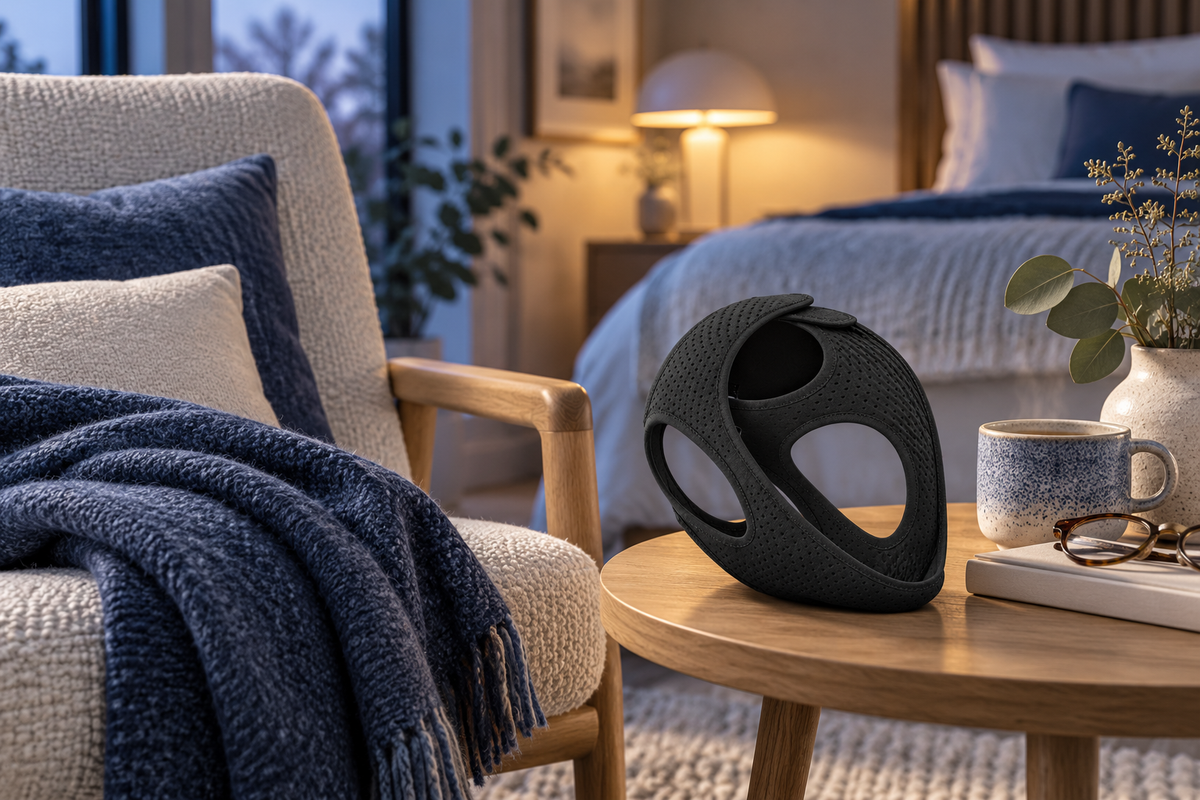
A reading corner can be as small as a chair with a lamp and somewhere to place a book. Keeping the arrangement simple makes it easier to use without turning an evening pause into a decorating project.
Work with the furniture you have
Choose a comfortable place where you can read without balancing items on your lap. Arrange the light for your task and keep the walking route clear. A shelf or existing side table may be enough for the book when you finish.
If you keep RestHaven nearby, give the strap a clean, suitable storage place separate from drinks and loose objects. Follow its care directions rather than using the reading chair as permanent product storage.
Keep activities distinct
Reading time does not need to become a test of how long you can tolerate a new accessory. Learn the strap's setup while awake, follow the supplied instructions, and remove it if it feels uncomfortable.
You can inspect the closure or prepare a support question in the same well lit space without assuming the product must be worn throughout the activity.
Let the corner stay ordinary
A lamp, a book, and a clear surface can be enough. The calm feeling of a brand photograph is an aesthetic reference, not a shopping list or a promise of better sleep.
Choose RestHaven for its product role and fit. If it does not suit your needs during the trial, use the free returns process rather than buying more room accessories to make the purchase feel complete.
Build the reading corner from one comfortable action
Start with where you already like to sit and how you hold the book. Check whether the light reaches the page and whether you can put the book down without awkward stretching. These details matter more than assembling a matching set of furniture.
Keep the surface limited to what serves the activity. A book, an accessible lamp, and a clear place for personal items may be enough. Return unrelated objects elsewhere so the corner does not become another storage pile with a chair beside it.
If you are introducing the RestHaven strap, learn its instructions during a separate awake check before assuming it belongs in the reading routine. A photograph of someone relaxing in an accessory does not establish your own comfort or suitability.
Does the corner need to look like the campaign imagery?
No. Navy, ivory, and warm lighting can provide inspiration, but the practical arrangement should fit your room and belongings. Props in a brand photograph are not a list of necessary purchases or an indication that they are included with the strap.
What should make you revise the setup?
Repeated inconvenience is a useful signal. If you keep reaching too far for a lamp or moving the same object out of the way, change that detail. Avoid adding more accessories before understanding the issue. A simple reading space should make the activity easier and remain useful whether you keep the strap, return it during the trial, or decide to enjoy the corner without a wearable item at all.
Start with a routine you would keep on an ordinary evening
A useful evening routine should work when the room is imperfect and the day has been busy. Begin with the actions you already need to take, such as putting away belongings, preparing clothing, or finding the book you want to read. There is no need to design an entirely new version of your life before one small habit can become easier.
Choose a modest purpose for the routine. You may want fewer last minute decisions, a clearer bedside surface, or a predictable place for a personal accessory. A practical purpose is easier to evaluate than a promise that every evening will feel peaceful in exactly the same way.
Keep the first version short. A routine with several optional stages can quietly become a checklist you feel obliged to complete. If the steps require more attention than they save, remove one. The goal is to make the evening easier to manage, not to create another standard to meet.
You can revise the arrangement after trying it. The first location for a book or strap may not be convenient, and a planned sequence may conflict with another person's schedule. Small changes based on actual use are more useful than defending a plan because it looked attractive in a photograph.
Pick a clear beginning and a practical stopping point
Link the routine to something recognizable. Closing a laptop, putting a cup in the kitchen, or changing into evening clothes can serve as a reminder that the day is moving into a different phase. The reminder should be something you already do often enough to notice.
The link is a convenience, not a rule. If you do not use the laptop one day, you have not lost permission to begin the routine. Choose an alternative cue that makes sense rather than treating a missed step as a failure that affects the rest of the night.
Give the routine an end as well. Once the useful preparation is complete, you can read, talk, or rest without checking whether there are more tasks hidden in the plan. A stopping point protects the routine from growing every time you see another attractive suggestion online.
Avoid placing important decisions at the very end. If you need to understand a product's instructions or ask support about sizing, do that when you can give it proper attention. The final minutes before bed are better suited to familiar actions than unresolved questions.
Use your existing space before adding new objects
Look at the surface you already reach naturally. A small cleared area may be enough for the items you use most often. Move objects that belong elsewhere instead of buying a larger container to hold everything that has accumulated beside the bed.
Separate the purpose of each place. One spot can hold clean personal items, another can hold a book, and laundry can remain in its own location. The arrangement does not need to be symmetrical or styled. It needs to be understandable when you are tired and do not want to search.
Keep frequently used items accessible without awkward stretching. Consider where you sit, how you turn toward the lamp, and where you set things down. If two people share the room, make sure one person's setup does not occupy the other's normal route or surface.
Leave space for a change of plan. An empty corner can temporarily hold a book or folded item without disrupting the whole arrangement. A room with no spare surface may look carefully organized but be frustrating to use on an ordinary evening.
Decide what the phone needs to do tonight
A phone may be an alarm, a way to stay reachable, or something you want to put aside. Decide which role matters for the evening before selecting a place for it. You do not need to copy a rule that conflicts with work, caring responsibilities, or a practical need to remain available.
If you choose a parking place, make it easy to find and use consistently. Check that charging arrangements follow the device's instructions and that cables do not create an awkward route around the bed. Avoid placing charging devices under bedding or improvising a setup because it looks tidier.
Agree on expectations with anyone sharing the room. One person may be comfortable turning the phone away while another needs access to messages. A clear conversation about sound, light, and availability can be more practical than silently assuming both people want the same arrangement.
The phone location is a small environmental choice, not proof of discipline. If you need to pick it up again, return to the routine when appropriate. A useful plan should support your circumstances rather than turn one changed decision into an argument with yourself.
Give a new accessory its own introduction
If you are considering the RestHaven strap, learn its shape and instructions separately from the rest of the routine. Identify the chin cradle, ear openings, and crown fastening while the product is open. A clear first introduction makes later decisions about storage and setup more informed.
The initial fitting should happen while fully awake and able to remove the strap easily. Keep the nose and lips uncovered, check that the fabric is not twisted, and follow the directions supplied with the item. Do not make a hurried adjustment simply because the rest of the evening is already underway.
Remove the strap if it causes pain, irritation, breathing difficulty, or persistent uncomfortable pressure. An evening habit should not become a reason to continue using an unsuitable product. If there is a medical suitability question or prescribed equipment involved, ask the appropriate clinician first.
Once the practical product questions are clear, decide whether the accessory belongs in your routine at all. A routine can remain useful without it. Keeping that choice open is more helpful than designing every step around an item before you know whether you want to keep it.
Keep a reminder that is short enough to use
A note can hold the one thing you want to remember tomorrow. It might be a question for support, a reminder about a return date, or a practical observation about where an item was stored. You do not need a detailed diary for the note to be useful.
Write the observation without trying to turn it into a complete explanation. If the strap was hard to find, note the storage problem. If you were unsure about the fastening, note that question. Clear descriptions make it easier to take a practical next step.
Avoid turning a bedtime note into a scorecard for the whole day. The purpose is to reduce mental repetition, not to grade yourself or another person. If the record becomes burdensome, simplify it or stop using it.
Keep order details and product instructions somewhere you can retrieve them. A saved folder, paper envelope, or existing notebook can work. The best system is the one you will recognize when you need the information, rather than a new organization method that takes time to maintain.
Plan for evenings that do not follow the plan
A late arrival or unusual schedule does not require a dramatic reset. Decide which action is still useful and which can wait. You might put belongings in their usual place and leave optional reading or tidying for another evening.
Do not rush a new product fitting to preserve a streak. If you cannot give an unfamiliar setup appropriate attention, postpone that part. A routine should make room for judgment, especially when a wearable item is involved.
If you share the space, communicate the change plainly. A brief explanation about arriving late or needing a different lamp arrangement can prevent a small surprise from becoming an unnecessary disagreement. Give the other person room to maintain the part of their routine that still works.
Return to the ordinary version when circumstances allow. There is no need to compensate with an unusually elaborate evening afterward. Consistency can mean knowing where to return, rather than insisting that every day looks identical.
Keep product decisions separate from the habit itself
RestHaven's 30 night trial gives time to decide whether the strap fits your routine. A free return request can be made within 30 days of delivery, and normal trial use does not by itself make the purchase ineligible. Keep the return details available from the beginning.
To request a return, email support@shopresthaven.com with the order number, checkout email, and the item or pack involved. The team verifies the request and provides a prepaid label or carrier barcode. Follow that message for the correct carrier and destination.
The returned parcel is checked after receipt, and the refund for the returned items is issued to the original payment method. Keep the drop off receipt and tracking information. For a partial pack return, confirm the items and refund amount before sending anything back.
If you decide the strap is not suitable, the useful parts of your evening routine can stay. A clearer surface, a convenient reading place, or a more considerate shared schedule does not depend on keeping a particular product. Let the accessory earn its place in the routine rather than making the routine justify the purchase.
Put the information to work
Choose the one question from this guide that matters most to your situation and write down the next action it calls for. That might mean checking the supplied instructions, reviewing an order detail, asking the team a specific question, or deciding that you need more information before purchasing. You do not need to complete every possible step at once.
Keep the relevant product information and any support reply together so you can find them when needed. Use the current RestHaven product page for the available pack options and prices, and the returns page for the 30 night trial process. The team can be reached at support@shopresthaven.com.
For a related practical question, continue with A Bedtime Routine for Small Spaces. Each guide can be read independently; use the contents links to return to the section that answers your immediate question.