
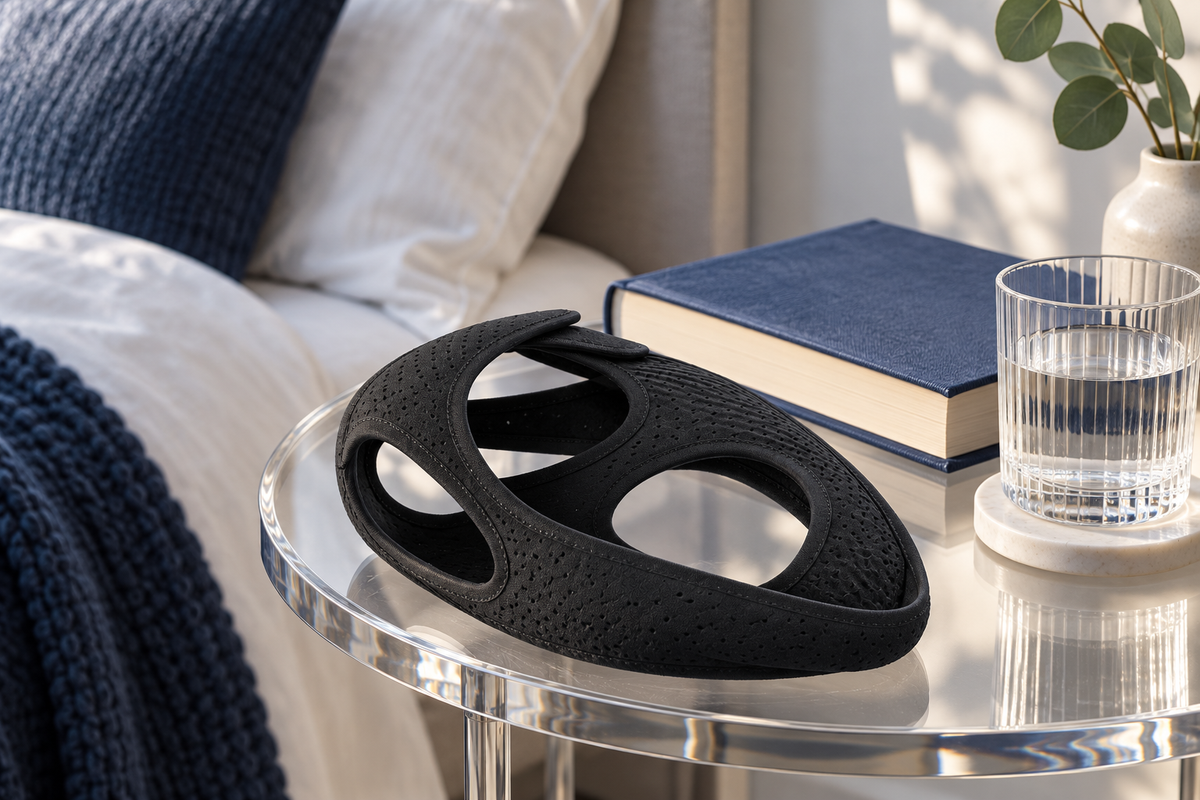
Reducing bedside clutter can start with removing items, not buying an organizer. A few deliberate choices may create enough space for the essentials you actually use each evening.
Sort by purpose
Move unrelated paperwork, empty packaging, and objects that belong elsewhere. Keep what serves a current need, such as a lamp, a book, or the instructions for a new RestHaven strap.
If something is important but rarely used, give it a more suitable home. Order records can be kept safely with other purchase information rather than loose beside a glass of water.
Separate items that interfere
Keep charging cables from crossing the strap's storage area and avoid piling clothing on top of it. Follow the care directions so the accessory is ready to store appropriately before putting it away.
A small existing dish or cleared drawer section may be enough, provided it is suitable for the item. Do not assume that a branded pouch or extra storage accessory is included with a strap unless the product listing says so.
Leave some space empty
An empty part of the surface gives you room to set down a book or inspect a fastening without moving everything else. That flexibility is often more useful than filling every corner with a matching object.
During the trial, consider whether RestHaven deserves a regular place in your routine based on its fit and handling. If it does not, the returns page explains the free return process within 30 days of delivery.
Sort by destination before choosing containers
Imagine a bedside surface covered with receipts, books, chargers, clothing, and a strap. Putting everything into one new tray may make the surface look organized while leaving the same confusion inside the tray. Begin by deciding where each item actually belongs.
Return paperwork and clothing to their usual places if they are not used beside the bed. Keep only the objects that support recurring actions there. Give clean personal items a separate location from laundry, and keep the strap away from surfaces that might catch its fabric.
Leave some free space after sorting. It gives an ordinary evening somewhere to put a temporary object without covering the items you need. A room does not have to be filled to appear finished.
When would another container help?
Only when it solves a specific remaining problem. If small personal items need separation or an existing surface does not protect the product, a suitable container may be useful. Choose it for that function rather than because every styled bedroom image appears to include one.
How do you maintain the clearer surface?
Use a short reset that returns each object to an obvious place. If the arrangement takes several steps or depends on one person remembering a detailed system, simplify it. A practical bedside setup should reduce searching and make inspection of personal items easier. It should not become a display that feels too carefully arranged to use or another shopping project before the original product trial is complete.
Plan the room around the actions that happen there
Start with a short list of ordinary actions: switching on a lamp, putting down a book, storing a clean personal item, and getting in or out of bed. A room becomes easier to use when these actions have sensible places, even if the furniture and bedding remain exactly as they are.
Notice where an item naturally lands when you finish using it. If that location repeatedly becomes cluttered, the problem may be that the item has no clear home. Moving it to a decorative container across the room can look tidy while making the everyday action less convenient.
Consider the view from where you actually sit or lie down. A surface that looks spacious from the doorway may be difficult to reach from the bed. Test the arrangement gently during the day, with enough light to see the edges and the path around the furniture.
Keep the project limited to the problem you want to solve. You do not need a new bed, a matching set of containers, or a complete color scheme to give your essentials a practical place. Begin with one surface and expand only if another change has a clear purpose.
Use navy and ivory as a palette, not a shopping list
Deep blue and warm ivory work well together because they create a clear visual relationship between darker and lighter areas. For a RestHaven inspired room, you might use an existing navy book or throw beside pale bedding rather than replacing everything at once.
Choose one main dark element and let lighter surfaces provide breathing room. If every object is equally dark and every surface is equally full, it becomes harder to distinguish the items you need. The visual contrast should help you find things as well as create an attractive photograph.
A black strap can sit comfortably within this palette without being treated as a decorative centerpiece. Give it a place that protects the item and remains convenient for use. A pale surface may make its edges easier to see during a visual inspection.
Work with the materials you already own. A cotton pillowcase, a simple ceramic dish for unrelated small belongings, or an existing shelf can provide texture. Do not assume that a tray or pouch shown in brand imagery comes with a product order unless the listing explicitly includes it.
Give clean personal items a separate home
Choose a clean, dry place for the strap and keep it separate from laundry. The location should make it easy to check the item before use and return it afterward. Avoid a spot where it is routinely crushed beneath books or mixed with objects that might catch the fabric.
Follow the care directions supplied with the product. Storage styling cannot replace those instructions. If you do not know whether a particular cleaning method or enclosed container is appropriate, ask support rather than assuming that a method used for another accessory will be suitable.
Allow the strap to dry fully after any permitted cleaning before enclosing it for storage. Do not use unapproved heat to speed that process. A storage place that looks elegant but hides a damp item is less practical than a simple arrangement that lets you manage the product properly.
If two people have straps, use separate locations so the items remain personal. You can distinguish them by position without writing on the fabric or adding anything to the product. Make sure both people understand the arrangement rather than relying on one person to manage it for the other.
Reduce clutter by giving objects a destination
Take each item off the bedside surface and ask whether it is used there. If it belongs in another part of the home, return it to that place. If it is used beside the bed, decide where it should go when you are finished with it.
Avoid moving everything into one drawer without sorting it. A hidden pile can still make the evening inconvenient when you need to find a particular item. A small number of recognizable locations is easier to maintain than a large collection of containers with unclear purposes.
Leave enough free surface for a temporary object, such as the book you are currently reading. An arrangement that has no spare capacity may look complete but become untidy as soon as an ordinary evening happens. Some empty space is a practical feature.
Make the reset easy. If putting the room back in order requires a long sequence of steps, it may not happen often. A simple return to a few obvious places is more sustainable than a display that only one person knows how to reconstruct.
Think about lighting from the user's position
Look at where the light falls when you are reading instructions, reaching for an item, or moving around the bed. A lamp should serve those activities rather than exist only as a visual accent. Use lighting products according to their own instructions and avoid improvised electrical arrangements.
In a shared room, discuss what happens when one person is ready to rest and the other wants to read. The conversation may lead to a different lamp position or a simple agreement about timing. It does not automatically require purchasing another device.
Keep switches and cables accessible without placing them where someone will catch them while moving. If the room arrangement depends on awkward reaching or stepping over a cable, reconsider the location. Appearance should not make ordinary movement more difficult.
When introducing a new wearable accessory, use enough light for an awake fit check. A softly lit campaign image may set a mood, but it is not a reason to attempt an unfamiliar adjustment in dim conditions. Practical visibility matters more at that moment than atmosphere.
Make a shared surface work without dividing everything perfectly
Two people may use the same table differently. One may need room for glasses and a book, while the other prefers a clear surface and a place for a personal item. Discuss the recurring actions before deciding that each person needs exactly half of the available space.
Agree on what can be shared and what should remain personal. A lamp might serve both people; a worn strap should have its own user and storage location. Clear boundaries prevent small misunderstandings when objects are moved or mixed together.
Keep the arrangement flexible enough for an extra book or a temporary change in schedule. The purpose is a room that supports both routines, not a system that requires constant negotiation over minor movements. Revisit the layout when a repeated inconvenience appears.
Avoid turning the room into a measure of either person's character. A practical request about where an item belongs is easier to answer than a complaint about someone always being untidy. Keep the discussion tied to what would make the shared space easier to use.
Keep fitting and product decisions visible
The RestHaven strap has a broad chin cradle, ear openings, perforated fabric, and an adjustable crown closure. Before finding its permanent place in the room, read the supplied instructions and understand how the design is intended to be worn and removed.
Try the first setup while fully awake, keeping the nose and lips uncovered. Check for twisted fabric, caught hair, or an edge that does not sit as intended. Remove the strap if it causes pain, irritation, breathing difficulty, or persistent uncomfortable pressure.
A beautiful bedside arrangement is not evidence that the product suits every person. Do not let the styling make the purchase feel permanent before you have made an individual decision about fit. For medical suitability or use with prescribed equipment, consult the appropriate clinician.
If you have a product question, email support@shopresthaven.com. A clear description of the part or instruction involved is a useful place to begin. You do not need to send private room photographs to ask a basic question about a fastening or measurement.
Review the arrangement after ordinary use
After a few normal evenings, notice which items are easy to find and which repeatedly end up somewhere else. Change the location that causes friction rather than assuming you need more storage. A useful room arrangement often becomes simpler as you learn what is actually used.
Keep order details and trial information accessible. RestHaven offers a 30 night trial, with free return requests available within 30 days of delivery. Normal trial use does not by itself make the purchase ineligible. The returns page explains the process.
If returning the strap, contact the team for verification and a prepaid label or carrier barcode. Use the supplied instructions, keep the carrier receipt, and wait for confirmation after the parcel is received and checked. Confirm partial pack returns with support before sending them.
The room can retain its useful improvements whether you keep or return the accessory. A clearer surface, a reachable lamp, and personal storage places serve everyday life on their own. Let the product fit the room's purpose rather than arranging the entire room around a decision you have not made yet.
Put the information to work
Choose the one question from this guide that matters most to your situation and write down the next action it calls for. That might mean checking the supplied instructions, reviewing an order detail, asking the team a specific question, or deciding that you need more information before purchasing. You do not need to complete every possible step at once.
Keep the relevant product information and any support reply together so you can find them when needed. Use the current RestHaven product page for the available pack options and prices, and the returns page for the 30 night trial process. The team can be reached at support@shopresthaven.com.
For a related practical question, continue with Layer Bedroom Lighting for a Gentler Evening. Each guide can be read independently; use the contents links to return to the section that answers your immediate question.